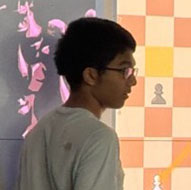
T his year, the Chess Club has made its return—this time led entirely by students. Noah (G10A), who decided to bring the club back, shares in this article what inspired him, what happens during sessions, and what’s next.
Why restart the club?
Ever since it was introduced to me by my father when I was five years old, chess has motivated me and has even pulled me out of extreme boredom at times. But the real factor was when my chess hunger grew rapidly after the rise of online chess in 2021. Naturally, my long-time goal is to progress and increase my chess “ELO” (which is the official rating system) up to the point of playing semi-competitively. To do this, I reopened the chess club at the start of the year, after a two-year hiatus, but with a little twist to it.
What happens in the club?
In past years, the chess club has always been casual, switch-around styles of playing only 1-on-1 chess and I realized that there might be a chance to make it more challenging. For this reason, I decided to make weekly PowerPoint slides teaching the members new skills, namely that of useful and game-changing strategies, tactics, and the dynamics of the game of chess.
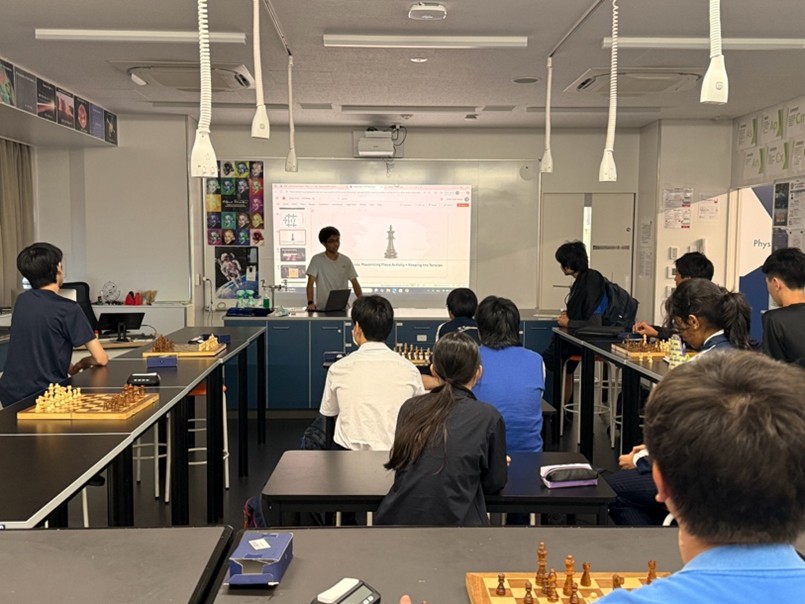
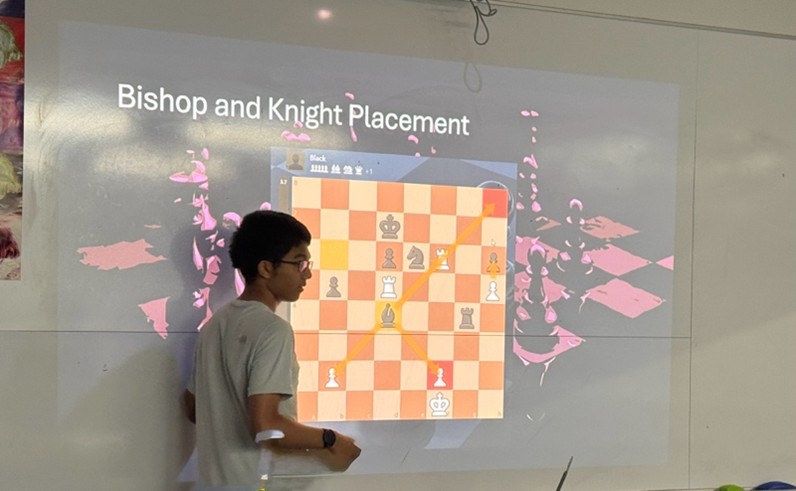
The images above show the interactive chess slides that are displayed weekly. These slides explore and provide interesting insights into what ‘advanced’ chess play looks like, and perhaps how an expert—such as a grandmaster—may think during a chess game. There are niche puzzles all throughout the slides so that everyone understands those important themes, as well as 20–30 minutes of blitz (5-minute format) games afterwards. I handpick the opponents based on their respective skill level.
What’s next?
In later weeks, I am planning to have more competitive tournament formats of rapid (10-minute format), as well as puzzle competitions (who can correctly solve the most puzzles), to further strengthen our chess club members’ chess abilities. Furthermore, we may have more personal game analysis, where we take tournament games, and suggest better strategies they could have come up with.
Overall, my most important moral that I believe in when playing chess is to have fun. It is impossible to continue growing in a sport without having the passion and fun in the game, as well as trusting in the process—growth does not show overnight. Thus, I hope that I will be able to share my own passion through these interactive slides, so that everyone can have fun!
Your move!
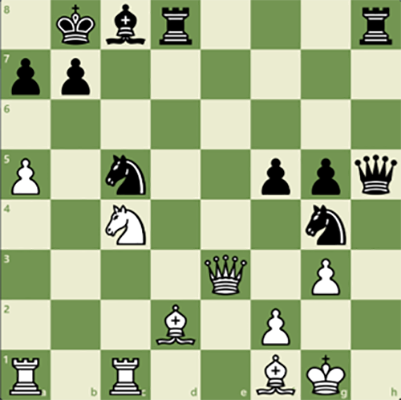
I will end this short chess segment with a chess puzzle that everyone can try and solve!
White to move and checkmate in eight moves: